The Future of Senior Living Isn’t More. It’s Smarter.
How Developers, Operators, and Designers Are Rethinking Value
A recent industry article, “Senior Living Sector Continues Its Evolution: But What’s Changing, and What Does It Mean for Construction?” by Al Fernandez, CEO and Principal of ANF Group, posed an important question:
As senior living continues to evolve, what comes next?
The conversation that followed brought together perspectives from development, operations, architecture, and interior design. While the specific answers varied, a common theme emerged:
The future of senior living is not about building more amenities. It’s about creating more meaningful experiences.
For years, the industry has focused on larger amenity packages, hospitality-inspired environments, and increasingly sophisticated resident offerings. Yet at a time when development costs, labor challenges, and financing pressures continue to impact new construction, the next generation of communities may be defined less by what is added and more by how thoughtfully every square foot is designed and utilized.
The Reality: Demand Isn’t the Problem
Contrary to what some may assume, demand for senior housing is not the industry’s greatest challenge.
According to John Waits, President of Blake Management Group, the issue is that the economics of development have become increasingly difficult to solve.
“Debt costs, construction costs, and labor costs during construction and once opened are the largest problems facing development,” said Waits.
Adam Mitchell, Managing Partner of Cadda Development, believes that addressing those financial pressures requires a coordinated approach among development, design and operations.
“The challenge is finding ways to deliver communities that meet demand while making financial sense. That requires collaboration from the very beginning, with development, design and operations working toward the same goals.”
Demand for senior living continues to grow, but delivering new communities to market is anything but quick. From planning and construction to lease-up and stabilization, a project can require four to five years before realizing its full operational potential.
As a result, many needed communities simply never make it off the drawing board.
The Amenity Arms Race May Be Ending
Historically, senior living communities differentiated themselves by adding amenities.
Dedicated theaters.
Chapels.
Coffee shops.
Large activity rooms.
Specialty gathering spaces.
But operators today are increasingly questioning whether every amenity warrants its own dedicated footprint.
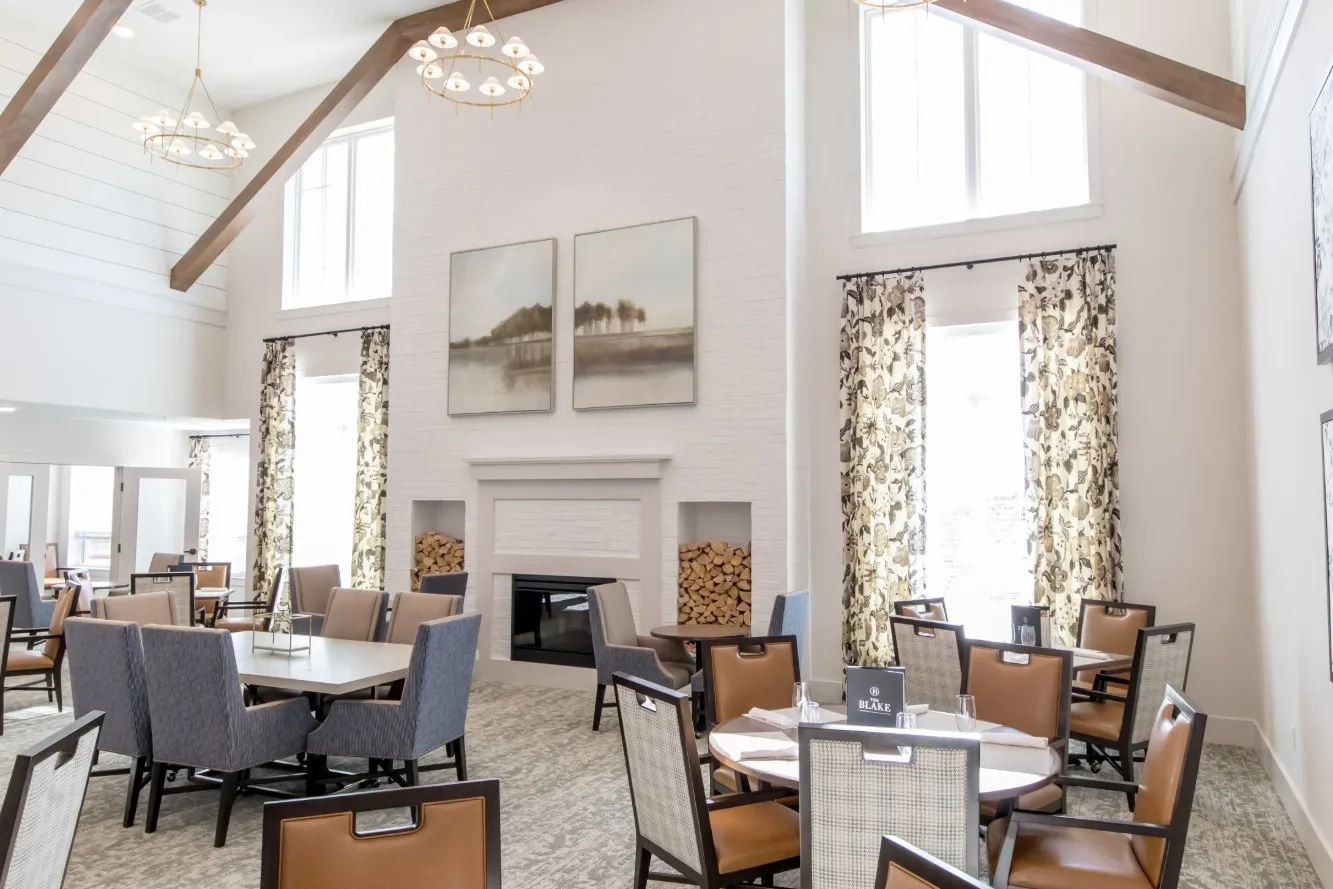
Waits points to the evolution of common spaces within communities his team has developed. “When our development partnership began in 2018, we had a chapel, a movie theater, and a workout room. With development costs continuing to rise, we have had to create a multipurpose space that can serve all three purposes.”
The shift is not about offering less. Instead, it is about creating spaces that work harder and adapt throughout the day.
Designing for Residents, Not Assumptions
One challenge facing the industry is determining whose expectations are actually driving design decisions.
Future planning often focuses on adult children, who frequently influence the decision-making process. Yet today’s average senior living resident may have very different priorities.
Comfort.
Social connection.
Trust.
Accessibility.
Human interaction.
While technology continues advancing, many residents still place greater value on relationships than automation.
As Waits notes, senior living remains fundamentally a people business. “Very nice senior living buildings can be built by anyone. However, creating a compassionate team of caring leaders is the hard part. We are in a people caring for people business.”
What Senior Living Designers Are Seeing
At Banko Design, these same market forces are influencing how communities are planned and programmed.
Rather than focusing on larger and larger common areas, today’s conversations often center on flexibility, wellness, and experience.
Outdoor environments are increasingly becoming extensions of interior spaces.
Common areas are expected to host multiple functions.
Wellness is expanding beyond fitness to include preventative health, social engagement, and overall quality of life.
“As communities become more efficient, we are challenged to create spaces that are purposeful and experiential,” says Melissa Banko, Founder and CEO of BD Studio Collection and Banko Design. “Great finishes will only get us so far. We are responsible for creating environments where residents gather, connect, thrive, and feel proud to call home.”
The Next Competitive Advantage
The next generation of senior living leaders may not be the communities with the largest buildings or the longest amenity lists.
They will likely be the communities that create:
- Greater flexibility
- Stronger resident connections
- More meaningful daily experiences
- Wellness-focused environments
- Efficient, adaptable spaces
- A genuine sense of home
In many ways, the industry’s future may look less like hospitality and more like thoughtfully designed neighborhoods where residents continue to find purpose, independence, and community.
For organizations such as Blake Management Group, and its development partner, Cadda Development, these conversations represent more than industry speculation. They are questions being addressed in real projects happening today.
While the challenges facing senior living development are significant, the opportunities are equally compelling.
The communities that emerge over the next decade will be shaped not simply by construction budgets or amenity packages, but by a deeper understanding of how residents want to live.
And perhaps that is the industry’s greatest opportunity: creating places that feel less like facilities and more like home.
— Maggie Churilla, Marketing Coordinator
- Categories