What Amenity Spaces are Residents Actually Using? Looking Beyond Trends to Create Multifamily Communities that Perform
Walk through any newly opened apartment community and you’ll likely find an impressive list of amenities. Golf simulators. Podcast studios. Wine lounges. Package rooms. Coworking spaces. Pet spas.
The challenge isn’t deciding what amenities to offer.
It’s determining which ones residents will actually use.
As multifamily communities continue to compete for residents, developers are asking an important question: Are we investing in the right spaces?
The answer often has less to do with what’s trending and more to do with understanding how residents truly live.
The Most Successful Amenities Support Everyday Life
One of the biggest misconceptions in multifamily design is that the most unique amenity is automatically the most valuable. In reality, the amenities that consistently perform well are often the ones residents can incorporate into their daily routines.
Think:
- Clubrooms
- Coworking spaces
- Fitness centers
- Outdoor gathering areas
- Coffee bars
- Flexible lounges
These spaces support activities residents are already doing. The amenity simply makes the experience more enjoyable, convenient, or social.
When an amenity becomes part of a resident’s routine, it becomes an extension of their home.
Connection Is Becoming More Important Than Entertainment
Today’s residents have access to entertainment everywhere.
What many are looking for is connection.
The most successful multifamily communities create opportunities for residents to interact naturally, whether that’s working together in a shared lounge, gathering around a firepit, meeting friends for coffee, or spending time in a comfortable clubhouse.
Amenities that encourage interaction often deliver greater long-term value than spaces designed around novelty alone. The goal isn’t simply to fill square footage. The goal is to create environments people want to be part of.
Coworking Spaces Continue to Evolve
As remote and hybrid work remains a reality for many professionals, coworking spaces have become one of the most heavily used multifamily amenities.
However, successful coworking environments look different than they did a few years ago.
Residents increasingly need:
- Private rooms for calls
- Quiet work areas
- Collaborative meeting spaces
- Comfortable lounge seating
- Access to power and technology
The strongest multifamily communities create a variety of work environments rather than relying on a single large workspace. Flexibility is often more important than size.
Outdoor Spaces Deliver Significant Value
Outdoor amenities consistently rank among the most popular spaces in a community.
Residents aren’t simply looking for a pool. They’re looking for experiences.
Spaces that support:
- Gathering
- Relaxation
- Dining
- Wellness
- Recreation
tend to see higher levels of engagement.
Thoughtful seating arrangements, shade structures, firepit areas, grilling stations, and comfortable furnishings often have a greater impact than expensive specialty features.
When done well, outdoor spaces feel like an extension of the interior environment.
Hospitality-Inspired Clubhouses Are Winning
The traditional clubhouse has evolved.
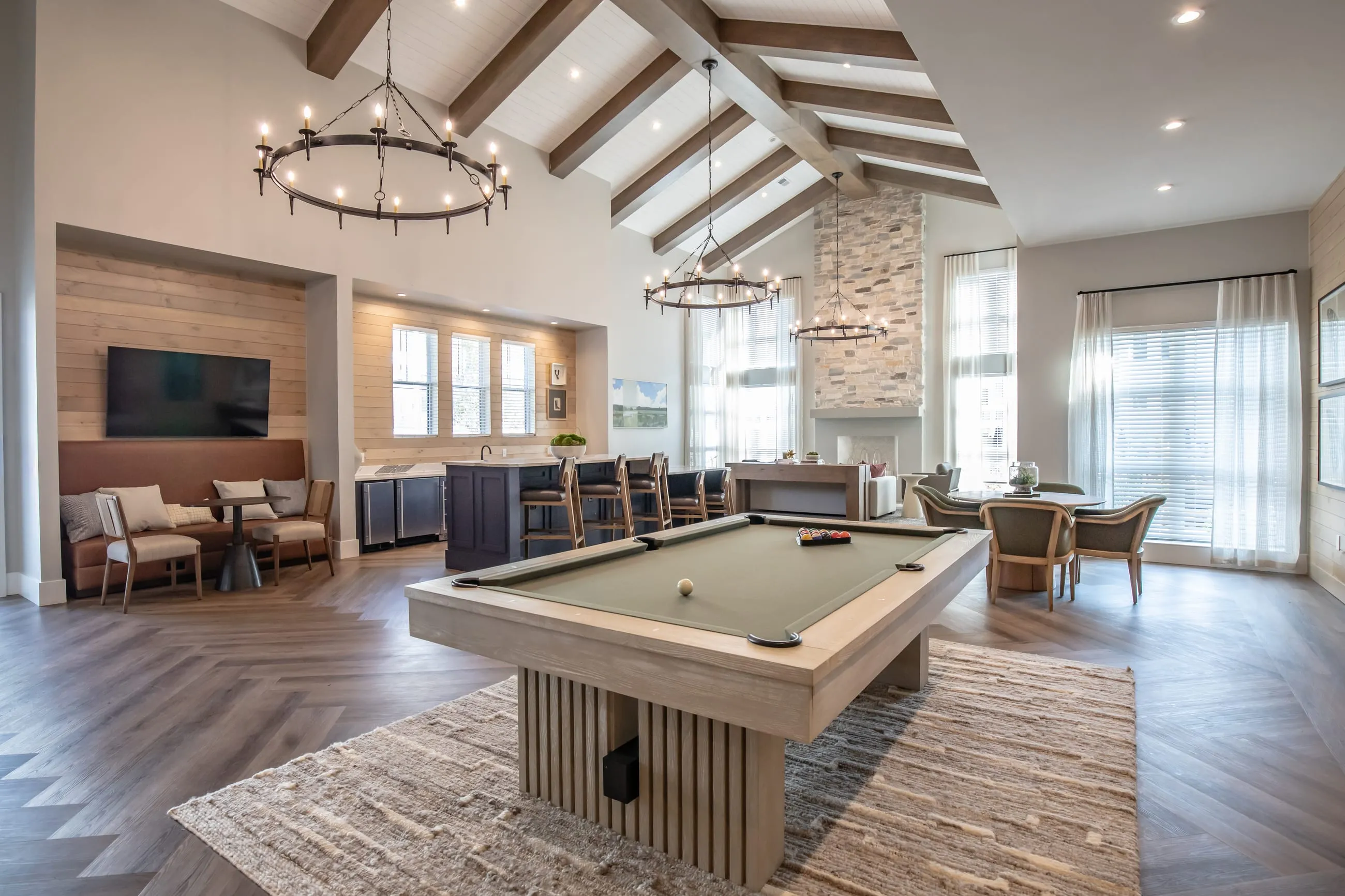
Rather than functioning as a single-purpose room, today’s clubhouses often serve multiple roles throughout the day.
A resident may:
- Grab coffee in the morning
- Work remotely during the afternoon
- Meet friends in the evening
- Attend a community event after hours
This shift has led many developers to embrace hospitality-driven design. The most successful clubhouses feel less like leasing offices and more like destinations residents actively choose to use.
Amenity Programming Matters More Than Amenity Count
A common mistake developers make is assuming more amenities automatically create more value.
In many cases, a thoughtfully programmed community with fewer, well-designed spaces can outperform a property with an extensive but underutilized amenity package.
The question should never be: “How many amenities do we have?”
The better question is: “How often are residents using them?”
Understanding resident demographics, lifestyle habits, and community goals is critical to making those decisions.
Designing for Longevity
Amenity trends will continue to evolve. What’s popular today may not be popular five years from now. That’s why flexibility is one of the most important considerations in multifamily design.
Spaces that can adapt to changing resident behaviors often provide greater long-term value than highly specialized environments.
The most successful communities balance:
- Flexibility
- Durability
- Comfort
- Hospitality
- Functionality
while creating spaces that feel welcoming and relevant over time.
What Residents Actually Want
At the end of the day, residents aren’t evaluating individual amenities. They’re evaluating the experience a community provides. The amenities that perform best are often the ones that help residents live, work, gather, and relax more comfortably.
They aren’t always the most expensive. They aren’t always the most unique. They’re simply the most useful.
Because successful multifamily design isn’t about chasing trends.
It’s about creating spaces residents genuinely want to use.